
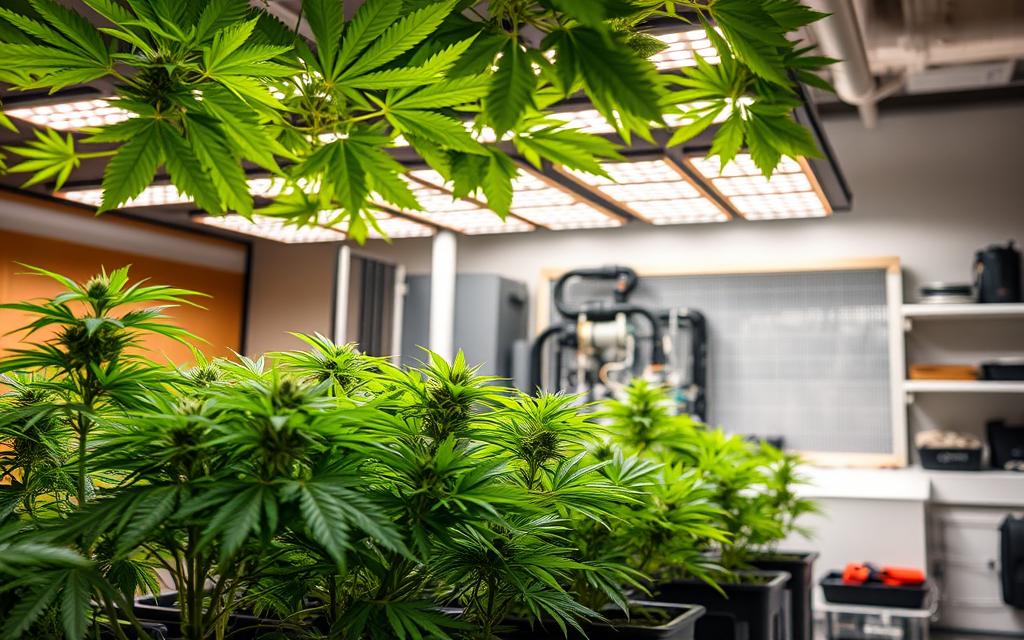
What if everything you assumed about growing marijuana was wrong? Contrary to popular belief, cultivating premium cannabis at home doesn’t require years of gardening expertise or expensive equipment. Modern techniques simplify the process, letting anyone achieve robust results with basic tools and guidance.
This article cuts through the myths, offering a clear roadmap for enthusiasts at every skill level. Whether you’re nurturing your first seedling or refining advanced methods, you’ll discover actionable strategies tailored to indoor environments. Resources like GrowWeedEasy.com confirm that success hinges on understanding light cycles, nutrient balance, and strain selection—not formal horticulture degrees.
Cost efficiency and customization stand out as major advantages. Imagine harvesting strains tailored to your preferences while saving significantly compared to dispensary prices. We’ll break down equipment essentials, debunk complexity myths, and share pro tips that streamline your journey from seed to harvest.
Key Takeaways
- Home cultivation requires minimal upfront investment and no advanced gardening skills
- Indoor setups allow precise control over growth conditions for consistent results
- Choosing the right strain impacts yield, potency, and maintenance difficulty
- Step-by-step guides simplify lighting, watering, and nutrient management
- Personalized harvests offer significant long-term savings versus retail purchases
Understanding Cannabis: Strains & Classifications
The foundation of successful cultivation lies in mastering plant genetics. Botanists debate whether Cannabis sativa L. represents a single species with variations or three distinct types. This classification impacts everything from growth patterns to therapeutic effects.
Cannabis Species: Sativa, Indica, and Ruderalis
Sativa varieties thrive in equatorial regions, reaching heights over 12 feet with narrow leaves. These plants typically produce energizing effects. Indica specimens from mountainous areas stay shorter (3-6 feet) with broad foliage, offering relaxing properties. Ruderalis, the wild cousin from Central Asia, auto-flowers regardless of light cycles but contains lower THC levels.
| Species | Origin | Height | Flowering Time | Key Trait |
|---|---|---|---|---|
| Sativa | Equatorial | 10-12 ft | 10-16 weeks | Uplifting effects |
| Indica | Mountainous | 3-6 ft | 8-12 weeks | Sedative properties |
| Ruderalis | Central Asia | 1-2.5 ft | Auto-flower | Low THC content |
Hybrid Varieties and Their Effects
Modern hybrids blend sativa’s cerebral highs with indica’s physical relaxation. Breeders create strains targeting specific needs: pain relief, creativity boosts, or sleep aid. Northern Lights (indica-dominant) and Blue Dream (sativa-leaning) demonstrate this versatility.
Expert tip: Match strains to your environment. Compact indicas suit indoor spaces, while sativas need vertical room. Auto-flowering hybrids simplify light schedules for beginners. Always verify a strain’s THC/CBD ratio before propagating cannabis plants.
Essential Tools and Materials for Growing Cannabis
Successful cultivation starts with selecting the right gear. Quality tools ensure healthy plant development while minimizing common challenges. Three elements form the foundation: genetic potential, balanced nutrition, and controlled environments.
Choosing Seeds, Soil, and Containers
Seed genetics determine plant resilience and cannabinoid profiles. Look for dark, firm seeds with tiger-stripe patterns from trusted breeders. Auto-flowering varieties simplify light management for new cultivators.
Soil pH between 5.8 and 6.3 enables optimal nutrient absorption. Pre-mixed organic blends with perlite or coco coir improve drainage. Avoid dense garden soils that suffocate roots.
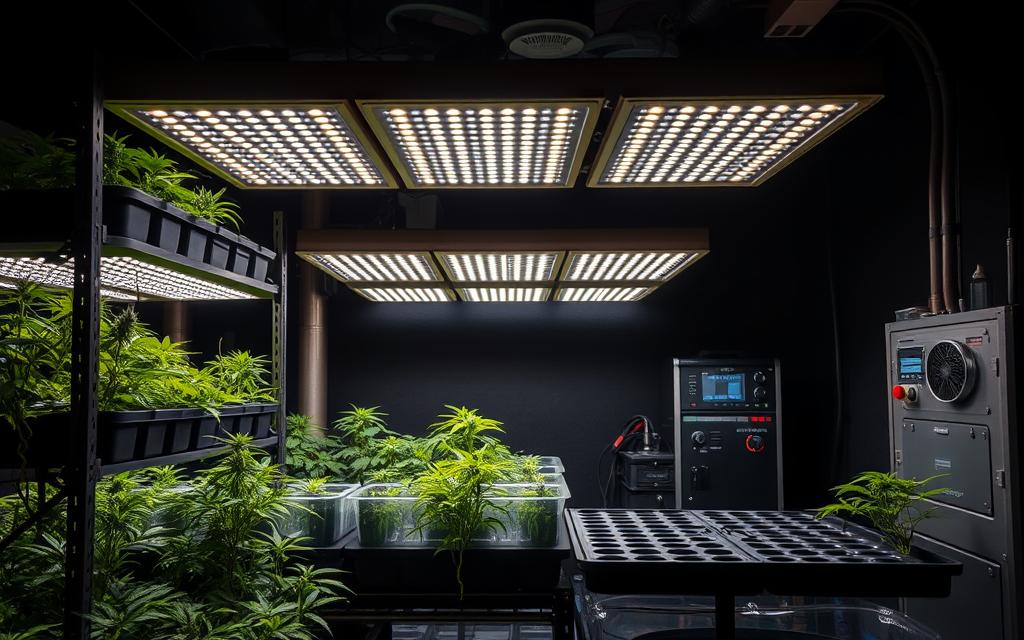
Fabric pots promote air pruning, preventing root-bound plants. Start seedlings in 1-gallon containers before upgrading to 5-7 gallon sizes. Drainage holes are non-negotiable—stagnant water invites mold.
Guide to Grow Lights and Other Equipment
Lighting systems directly impact yield and potency. LEDs offer energy efficiency and low heat output, ideal for small spaces. HPS fixtures deliver intense brightness but require cooling solutions.
| Light Type | Energy Use | Lifespan | Best For | Cost |
|---|---|---|---|---|
| LED | Low | 50,000 hrs | All stages | $$$ |
| HPS | High | 10,000 hrs | Flowering | $$ |
| CFL | Medium | 8,000 hrs | Seedlings | $ |
Ventilation systems maintain CO2 levels and prevent heat stress. Pair inline fans with carbon filters for odor control. Digital timers automate light cycles—18 hours on for vegetative growth, 12 hours for flowering.
Beginners should prioritize adjustable-height light hangers and pH meters. These tools adapt to plant needs without requiring advanced skills. Regular equipment checks prevent costly mid-cycle failures.
Preparing Your Grow Space
Effective cultivation begins with environmental design. Dedicated areas require strategic planning to balance plant needs with available room dimensions. Three elements demand priority: climate control, light distribution, and spatial efficiency.
Optimizing Temperature, Humidity, and Airflow
Maintain 70-80°F during daylight hours for vigorous growth. Night temperatures shouldn’t drop below 62°F. Humidity levels shift with growth phases:
- Seedlings: 65-70% RH
- Vegetative: 40-70% RH
- Flowering: 40-50% RH
Oscillating fans prevent stagnant air pockets. Pair exhaust systems with carbon filters to manage heat and odors. Digital hygrometers provide real-time monitoring.
Indoor Setup: Lighting and Space Management
Position lights 12-24 inches above canopy tops. Reflective wall linings maximize lumen distribution. Use timers to automate daily cycles:
- 18/6 schedule: Vegetative phase
- 12/12 schedule: Flowering trigger
Vertical racks double usable space in tight areas. Rotate plants weekly for even light exposure. Leave 2-3 feet between mature specimens to prevent overcrowding. Adjustable light hangers accommodate height changes during the process.
Step by Step: How to Grow Your Own Weed at Home
Seed activation marks the first critical phase in cannabis development. Proper technique during this stage determines overall success, with 92% of failed crops tracing back to poor germination practices. Let’s explore proven methods that ensure vigorous starts.
Seed Activation and Sprout Development
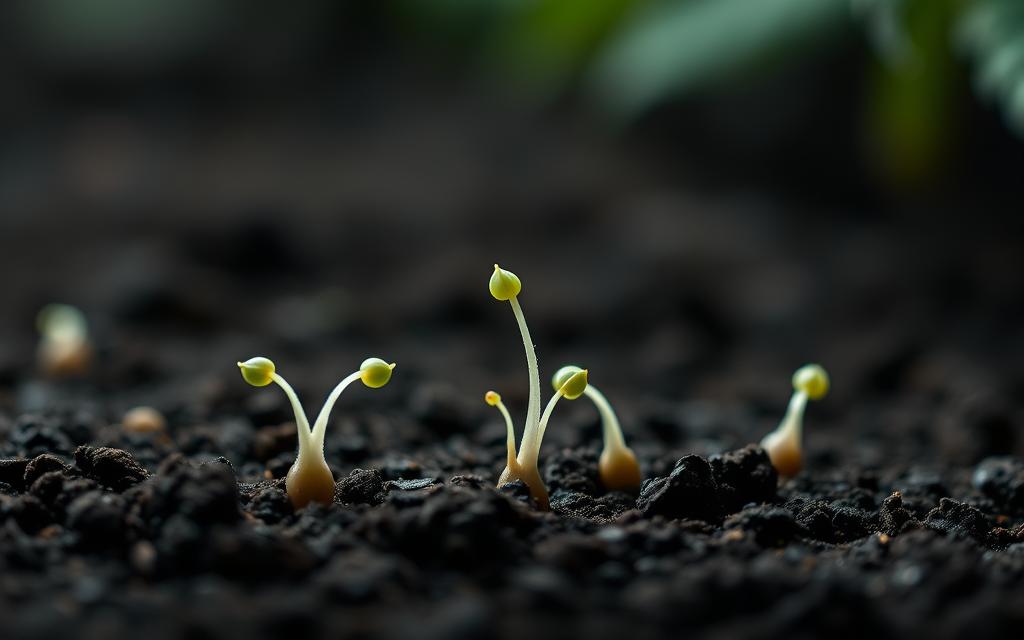
Paper towel method remains the gold standard. Begin by soaking seeds in room-temperature water for 18 hours. Transfer them to damp paper towels, spaced 2 inches apart.
- Cover with a second moist towel
- Place between dinner plates
- Store in dark area (70-80°F)
Check moisture levels every day without disturbing seeds. Taproots emerge within 3-7 days. Handle sprouts with tweezers by the shell, never the fragile root.
Soil Transition and Early Maintenance
Prepare 1-gallon pots with pre-moistened soil. Create ¼-inch holes using a pencil tip. Gently position sprouts root-down, covering lightly with soil. Mist surface until damp—avoid compacting the medium.
Maintain 70% humidity under soft light for 72 hours. Gradually increase brightness after seedlings break soil. Water when the top inch feels dry, typically every 36 hours. Rotate containers daily for even stem development.
Pro tip: Label each plant with strain details and germination dates. Track progress using a simple calendar app to optimize future cycles.
Caring for Your Cannabis Plants
Consistent care separates thriving specimens from struggling ones. Mastering hydration, nutrition, and structural guidance ensures vigorous development and premium harvests. Let’s explore proven strategies used by professional cultivators.
Watering Practices and Nutrient Management
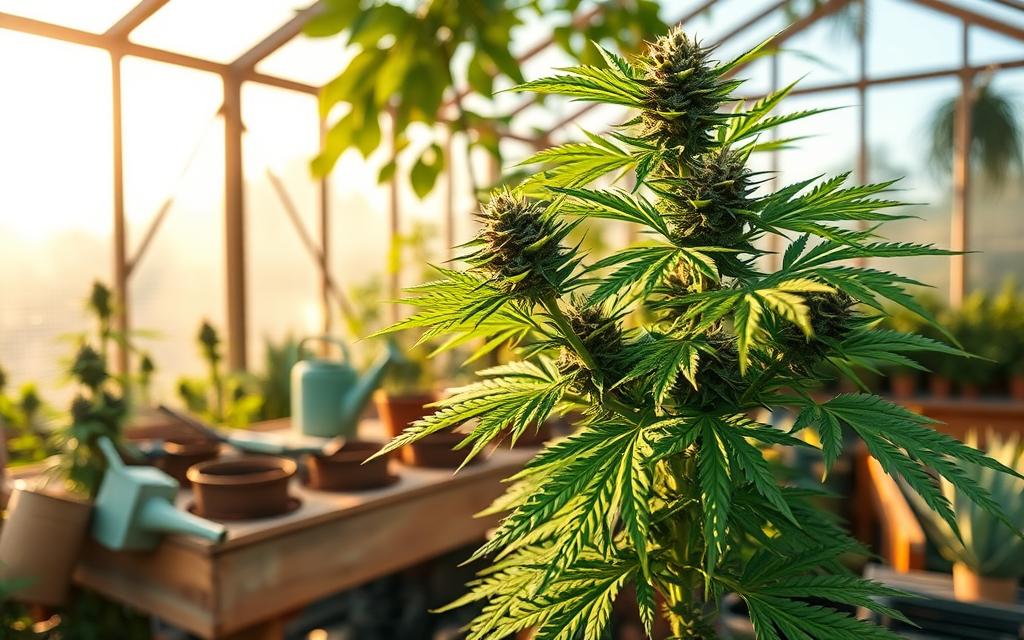
Overwatering ranks as the top beginner mistake. Check soil moisture by inserting a finger up to the second knuckle—water only when dry. Use room-temperature pH-balanced liquids to prevent root shock.
Nutrient schedules vary by growth phase. Seedlings need mild nitrogen blends, while flowering plants demand higher phosphorus. Follow proper nutrient schedules to avoid burn or deficiencies. Yellowing leaves often signal imbalance.
Training Techniques: LST, Super Cropping, and Defoliation
Low Stress Training (LST) bends stems gently to expose lower buds to light. Secure branches with soft ties, reshaping daily. Super Cropping involves strategic stem pinching to boost resin production—ideal for dense colas.
Defoliation removes select fan leaves to improve airflow and light penetration. Target shaded areas during vegetative growth. These methods collectively increase yields by 25-40% when applied correctly.
Successful growers track progress using journals or apps. Adjust techniques based on plant responses—stunted growth may indicate over-training. Trusted resources like GrowWeedEasy.com offer visual guides for perfecting these skills.
Managing Growth Stages and Flowering
Proper timing separates average harvests from exceptional ones. Cannabis plants demand specific environmental cues to shift energy from leaf production to bud development. This critical phase determines resin output and overall potency.
Transition from Vegetative to Flowering Stage
Light cycles act as nature’s switch. Indoor growers trigger the flowering stage by reducing daily light exposure from 18 to 12 hours. This mimics autumn conditions, signaling plants to start bud formation.
Adjust temperatures to 68-78°F during the day and 58-68°F at night. Lower humidity (40-50%) prevents mold as flowers develop. Structural changes appear within 7-10 days—look for white pistils at branch joints.
Maximizing Light and Heat During Flowering
Light intensity directly impacts bud density. Position LEDs 18-24 inches above the canopy, providing 600-900 PPFD. Use timers to maintain strict 12-hour dark periods—even brief light leaks can stress plants.
Infrared thermometers help spot hot zones. Rotate pots weekly for even exposure. Premium cannabis seeds from stable genetics handle these adjustments better, producing predictable results.
| Growth Stage | Light Hours | Ideal Temp | Key Goal |
|---|---|---|---|
| Vegetative | 18 | 70-80°F | Stem/leaf growth |
| Early Flower | 12 | 68-78°F | Bud initiation |
| Late Flower | 12 | 65-75°F | Resin production |
Troubleshooting and Maintenance
Even experienced cultivators encounter challenges. Weekly inspections help catch issues before they escalate. Look for discolored leaves, slow growth, or unusual markings—these often signal underlying problems needing immediate attention.
Identifying and Treating Nutrient Deficiencies
Yellowing lower leaves typically indicate nitrogen shortage. Add fish emulsion or balanced fertilizers to restore vibrancy. Purple stems with brown leaf edges? That’s phosphorus deficiency—bone meal supplements work wonders.
Test soil pH weekly using affordable strips or digital meters. Imbalances lock out nutrients, even when present. Adjust water pH to 6.0-6.5 for soil grows or 5.5-6.1 for hydroponic setups.
Preventing and Managing Pests, Mold, and pH Imbalances
Neem oil spray tackles spider mites and aphids without harsh chemicals. Apply every 5 days until infestations clear. Improve airflow and reduce humidity below 50% to combat powdery mildew.
Check pots for proper drainage weekly. Root rot thrives in soggy containers—switch to fabric pots if issues persist. Rotate plants in direct sunlight setups to prevent light burn on delicate foliage.
Document every adjustment in a grow journal. This creates a reference for future cycles, helping refine your approach. Remember: Most issues resolve quickly when addressed early.
Conclusion
Cultivating quality cannabis at home becomes straightforward with proper planning. This guide outlined core steps—from selecting strains to optimizing light cycles and solving common issues. A well-designed indoor garden delivers consistent results, whether for personal enjoyment or medical needs.
Medical cannabis users gain particular advantages through controlled cultivation. Tailored strains ensure specific therapeutic effects, while recreational growers enjoy cost savings and customization. Both groups benefit from avoiding dispensary markups and quality uncertainties.
Success hinges on applying fundamental principles consistently. Start with suitable equipment and reliable genetics. Monitor environmental factors like humidity and pH levels. Engage with local or online gardening communities to exchange tips and troubleshoot challenges.
Every harvest offers learning opportunities. Document progress, adjust techniques, and celebrate milestones. Shared experiences strengthen collective knowledge within the cannabis community, helping newcomers avoid common pitfalls.
Ready to begin? Revisit key strategies on strain selection and nutrient management. With dedication and the right approach, your indoor garden can thrive. Join forums, attend workshops, and transform curiosity into rewarding harvests.
