
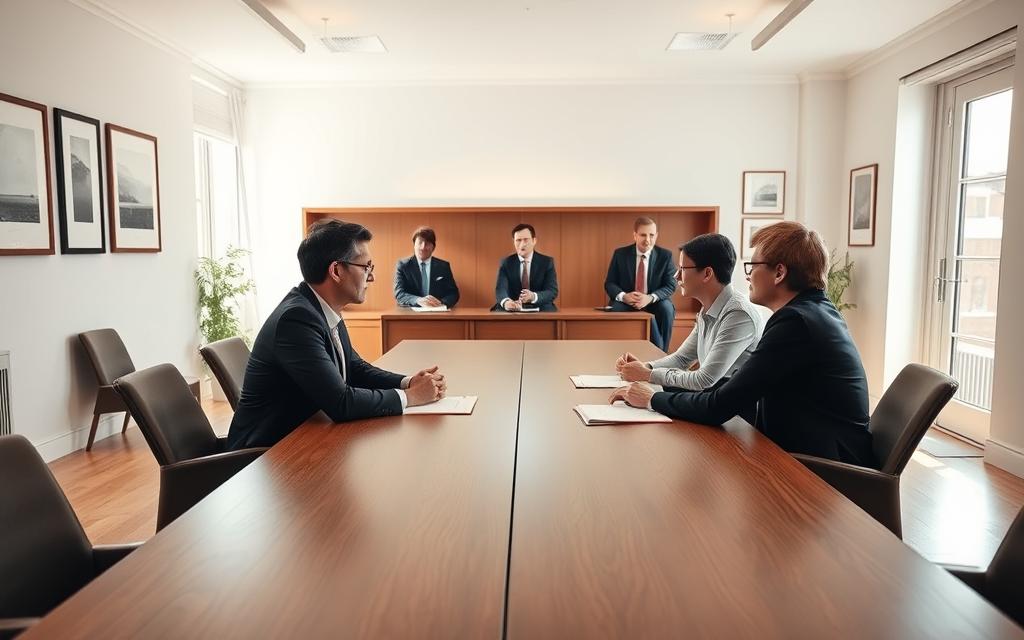
Did you know that about 80% of legal fights can be solved through mediation? This saves people a lot of money on court costs. Legal mediation is a smart way to solve problems without going to court.
Legal mediation is when a neutral person helps both sides talk and find an agreement. It’s different from court fights because it’s more flexible and cheaper. It keeps things private and helps solve legal problems in a better way.
The main idea of legal mediation is to let people solve their own problems. Trained mediators help by making sure everyone talks and finds common ground. They find solutions that courts might miss.
Key Takeaways
- Mediation resolves up to 80% of legal disputes
- Provides a collaborative conflict resolution approach
- More cost-effective than traditional litigation
- Offers confidential dispute resolution
- Empowers participants to control outcomes
Understanding Legal Mediation
Legal dispute mediation is a strong choice instead of going to court. It’s a way to solve problems together. This method is more flexible and helps people work things out in a better way.
The court mediation process is a special way to solve conflicts. It’s based on working together to find solutions. Mediation is a way to solve problems without going to court. It’s private and lets people find solutions that work for everyone.
Defining Legal Mediation
Legal mediation is when a neutral person helps two sides agree. It’s different from going to court because it focuses on:
- Working together to solve problems
- Keeping relationships strong
- Finding new and creative solutions
- Lowering stress and emotions
Key Features of Legal Mediation
A good guide to mediation law points out important things about it. These things make mediation different from other ways to solve problems:
| Feature | Description |
|---|---|
| Voluntary Participation | All parties must willingly engage in the process |
| Confidentiality | Discussions remain private and cannot be used in court |
| Neutral Facilitation | Mediator guides conversation without imposing decisions |
| Flexible Resolution | Parties craft personalized solutions |
Mediation turns conflict into a chance for understanding and talking things through.
The Role of Mediators in Legal Mediation
Mediators help solve legal problems by working together. They are neutral and help find solutions that everyone can agree on. They don’t make the decisions.
Being a mediator needs special skills and lots of training. A good mediator knows how to start a helpful conversation. They also know how to handle tough talks.
Qualifications of a Mediator
Mediators have certain qualifications to show they are experts:
- They have a degree in law, psychology, or conflict resolution.
- They have a professional certification from known mediation groups.
- They have a lot of training in mediation.
- They are good at talking and understanding people’s feelings.
Responsibilities of a Mediator
Mediators do important things:
- They make a safe place for talking.
- They help people talk and work together.
- They find out what each side really wants.
- They help find solutions that work for everyone.
- They make sure everyone is treated fairly.
Mediation Techniques are key to finding solutions. They use listening, changing how problems are seen, and finding common goals.
Benefits of Legal Mediation
Legal mediation is a great way to solve problems instead of going to court. It helps people find solutions together. This way, they can work out their issues in a better way.
Looking into mediation shows it’s a smart way to solve conflicts. It’s fast, cheap, and helps everyone understand each other better.
Cost-Effectiveness
Mediation is much cheaper than going to court. People save a lot of money this way:
- Less money spent on lawyers
- Deals are made faster
- Less money for court stuff
- Lower costs overall
Time Efficiency
Mediation makes solving problems much quicker than court. Typical court cases can take months or years. But mediation can solve things in just weeks.
- Meetings are set up quickly
- Meetings can be at any time
- People talk directly to each other
- Decisions are made faster
Confidentiality
Mediation is private, unlike court. This means people can talk about sensitive stuff without fear of it being public.
- Private talks
- Secret agreements
- Personal info stays safe
- Less stress for everyone
Choosing legal mediation makes solving problems better. It’s a team effort that’s quick, cheap, and respectful.
Comparing Legal Mediation to Litigation
When dealing with legal disputes, we must think about how to solve them. Mediation is a strong way to settle disputes, unlike going to court.
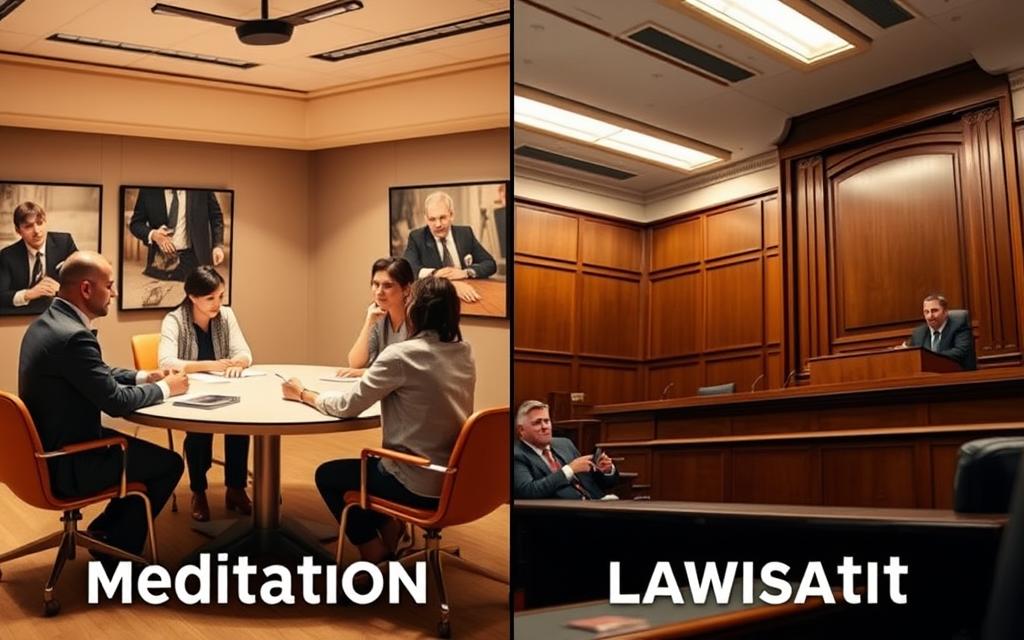
There are two main ways to handle legal fights: mediation and lawsuits. Each method has its own way of solving problems and how people feel about it.
Distinctive Process Characteristics
Mediation and lawsuits are very different in how they work:
- Litigation has strict rules from the court
- Mediation is flexible and works together
- Court fights are against each other
- Mediation aims for understanding both sides
Resolution and Outcome Dynamics
The big difference is in how they solve problems. Litigation usually means one side wins, with a judge deciding. But mediation lets both sides find a solution they agree on.
Mediation has many benefits:
- It’s faster
- It costs less
- It keeps relationships good
- It lets people have more control
More lawyers are choosing mediation. They see it as a smart way to solve problems. It focuses on working together, not fighting.
Types of Legal Mediation
Legal mediation is a flexible way to solve problems in many areas. Family mediation is key for fixing issues in personal relationships. Other types of mediation offer special solutions for different situations.
There are many kinds of legal mediation for different problems. Knowing about these helps people and groups pick the best way to solve conflicts.
Family Mediation: Navigating Personal Conflicts
Family mediation helps solve tough personal issues. Civil mediation explained in family settings usually deals with:
- Divorce settlement talks
- Child custody plans
- Sharing property and inheritance
- Decisions about eldercare
Workplace Mediation: Professional Harmony
Workplace mediation fixes problems between coworkers and bosses. It keeps work places happy by solving:
- Disagreements between people
- Issues with work performance
- Claims of harassment or unfair treatment
- Disputes over contracts and pay
Community Mediation: Social Conflict Resolution
Community mediation helps people get along better. It solves problems in neighborhoods and local groups.
| Mediation Type | Primary Focus | Typical Participants |
|---|---|---|
| Family Mediation | Personal Relationships | Family Members |
| Workplace Mediation | Professional Interactions | Employees, Managers |
| Community Mediation | Neighborhood Relations | Local Residents, Groups |
Learning about these legal mediation types helps solve big and small problems. It uses teamwork and clear plans to fix issues.
The Legal Framework of Mediation
Mediation in civil law is a smart way to solve legal problems outside of court. It has a clear legal setup for people to agree on solutions.
Understanding mediation laws is key. The legal system sees mediation as a good alternative to going to court. It offers flexible and team-based solutions.
Mediation Agreements: Structural Components
A strong mediation agreement has important parts:
- Clear identification of all participating parties
- Specific terms of the proposed settlement
- Confidentiality provisions
- Binding nature of the agreement
- Signatures of all involved parties
Enforceability of Mediation Outcomes
How mediation results are enforced depends on several things. Mediation in Civil Law lets parties make agreements that courts can enforce if needed.
Important points for enforceability are:
- Voluntary participation of all parties
- Full disclosure of relevant information
- Absence of coercion or undue influence
- Compliance with local legal standards
It’s wise to talk to lawyers to make sure your agreement is legal and can be followed.
Preparing for Legal Mediation
Getting ready for legal mediation is key. It needs careful planning to solve disputes well. Everyone must be ready for a good mediation session.
Essential Documentation Gathering
Gathering documents is very important. You need to collect and organize important papers that show your side:
- Contracts and written agreements
- Financial records
- Communication logs
- Relevant correspondence
- Supporting evidence
Setting Clear Mediation Goals
Setting goals is important in mediation. You should:
- Identify primary objectives
- Prioritize critical issues
- Determine acceptable compromise points
- Develop realistic expectations
Pro tip: Write down specific goals before the mediation session to maintain focus and clarity during negotiations.
Mental and Emotional Preparation
Being emotionally ready is important. You should:
- Practice active listening skills
- Remain open to alternative solutions
- Control emotional responses
- Stay professional and respectful
Good preparation makes mediation better. By getting documents, setting goals, and staying open, you can find a good solution.
The Mediation Process Explained
The Mediation Process is a strong way to solve problems without going to court. It uses ADR Legal Support to help people work together to find solutions.

Understanding the mediation journey is key. It has steps designed to help people talk openly and understand each other.
Initial Meeting: Setting the Foundation
In the first meeting, the mediator sets the rules and makes a fair place. The main goals are:
- Introducing everyone
- Explaining how mediation works
- Setting standards for talking
- Talking about keeping things private
Joint Session: Collaborative Dialogue
In the joint session, each side gets to share their story without being cut off. This helps them:
- Share their story
- Find out what’s really important
- Learn what the other side thinks
- Start thinking about possible solutions
Private Caucus: Strategic Problem-Solving
Private caucuses are a special part of mediation. They are private talks between the mediator and each side. They help with:
- Looking into what’s really wanted
- Checking out possible deals
- Finding ways to talk better
- Seeing what might happen next
By using these steps, mediation offers a way to solve problems that is flexible and respectful.
Challenges in the Mediation Process
Mediation is a way to solve legal problems. But, it’s not easy. People often face big challenges that make it hard to find a solution.
The mediation process is full of tricky communication and emotions. Knowing these challenges is key to solving conflicts well.
Communication Barriers in Mediation
Good communication is very important in mediation. But, people often have trouble with:
- Misinterpreting what others say and do
- Finding the right words to share their true needs
- Styles of talking that make things tense
- Not understanding each other because of language or culture
Emotional Challenges During Mediation
Strong feelings can really affect mediation. Mediators need to handle these feelings well to help everyone talk.
| Emotional Challenge | Potential Impact | Mediation Strategy |
|---|---|---|
| Anger | Blocks rational communication | Active listening techniques |
| Fear | Prevents open dialogue | Creating safe communication environment |
| Defensiveness | Reduces problem-solving capacity | Neutral, non-confrontational approach |
Skilled mediators know that solving these problems takes time, understanding, and smart talking. By tackling these issues, mediation can turn tough disputes into chances for working together.
Legal Mediation in Practice
Legal mediation turns tough disputes into chances for working together. It’s a smart way to solve problems without going to court. Looking at real-life examples shows how effective it can be.
Good Legal Mediation Examples show how talking and understanding each other can solve problems. They show how mediators help people find good solutions together.
Compelling Case Studies
- Workplace Discrimination Resolution
- Neighborhood Property Dispute Settlement
- Family Inheritance Conflict Mediation
Mediation Success Rate Statistics
| Dispute Type | Successful Resolution Rate |
|---|---|
| Commercial Conflicts | 78% |
| Employment Disputes | 72% |
| Family Law Matters | 65% |
Studies show that people are happier with mediation than with court fights. Mediation lets people create solutions that really work for them.
Key Factors in Successful Mediation
- Neutral third-party facilitation
- Confidential communication
- Voluntary participation
- Flexible resolution strategies
Mediation Services Legal are getting better, helping solve problems in many areas. It’s a kind and quick way to fix issues instead of fighting in court.
Ethical Considerations in Mediation
Legal mediation is built on trust and honesty. The Mediation Law Guide talks about important ethical rules. These rules help keep everyone safe and fair during the Legal Mediation Process.
Mediators have big ethical jobs. They deal with tough situations and follow strict rules.
Confidentiality: The Cornerstone of Trust
Keeping things private is key in mediation. The process makes sure:
- All talks stay secret
- No info can be used in court later
- People can talk freely without worry
Mediator Impartiality and Neutrality
Mediators must stay neutral. They have to:
- Not let personal feelings get in the way
- Treat everyone the same
- Make sure no one has too much power
| Ethical Principle | Key Requirement | Purpose |
|---|---|---|
| Confidentiality | Complete privacy of discussions | Encourage open communication |
| Impartiality | Neutral stance by mediator | Ensure fair resolution |
| Informed Consent | Full disclosure of process | Protect participant rights |
Mediators follow strict rules to keep mediation honest. Trust, respect, and fairness are key in every session.
How to Find a Legal Mediator
Finding the right Lawyer For Mediation is key. It helps solve disputes well and fast.

Choosing a Mediation Services Legal expert needs careful thought. Use professional networks and resources. They help find mediators who know how to solve conflicts.
Resources for Finding Mediators
There are many ways to find Legal Mediation experts:
- Professional Mediation Associations
- State Bar Association Referral Services
- Online Legal Mediation Directories
- Court-Connected Mediation Programs
- Professional Networking Platforms
Questions to Ask When Selecting a Mediator
When looking at mediators, ask important questions:
| Criteria | Key Questions |
|---|---|
| Professional Experience | How many years have you practiced mediation? |
| Specialization | What types of disputes do you typically handle? |
| Training | What certifications do you hold? |
| Approach | What is your mediation philosophy? |
Tip: Always check a mediator’s credentials. Ask for recommendations from trusted lawyers.
The Future of Legal Mediation
Legal mediation is changing how we solve conflicts. It’s becoming more popular thanks to new tech and legal changes.
New trends are changing how we see mediation. Digital tools are making it easier and more effective.
Current Trends in Mediation
- Increased digital platform adoption
- Virtual mediation sessions
- Artificial intelligence integration
- Cross-border dispute resolution capabilities
Technology’s Transformative Role
New tech is changing mediation. Online tools help us talk in real time, no matter where we are.
Some big tech changes include:
- AI-powered mediation tools
- Secure video conferencing platforms
- Blockchain-enabled agreement tracking
- Machine learning conflict analysis
The future of legal mediation looks bright. It will be faster, clearer, and easier to use. Those who use new tech will lead the way.
Legal Mediation vs. Arbitration
Alternative Dispute Resolution offers many ways to solve problems outside of court. Knowing the difference between mediation and arbitration helps choose the best way to solve disputes.
Mediation and arbitration are two different ways to solve problems. They are both part of Alternative Dispute Resolution. But they work in very different ways.
Fundamental Differences in Dispute Resolution
The main difference is who makes the decision:
- Mediation is about working together to find a solution.
- Arbitration means a third person makes a final decision.
- Mediators help talk things out without making a choice.
- Arbitrators make a final choice.
Choosing the Right Approach
Choose mediation when:
- Keeping relationships good is important.
- You want a solution both sides can agree on.
- You need to keep things private.
- It’s cheaper than other options.
| Mediation Characteristics | Arbitration Characteristics |
|---|---|
| Voluntary participation | Legally binding decision |
| Collaborative process | Adversarial proceeding |
| Flexible outcomes | Predetermined ruling |
| Lower cost | Higher expense |
Knowing these differences helps pick the best way to solve disputes.
Training and Certification for Mediators
To become a mediator, you need special training and a certification. Mediators have skills that are different from lawyers. They must learn a lot to do well in mediation.
There are many training programs for legal mediation. These programs teach important skills for solving conflicts and talking well.
Comprehensive Training Programs in the United States
In the United States, there are many ways to learn to be a mediator:
- University-based mediation certificate programs
- Professional association training courses
- Online and in-person certification programs
- Specialized mediation workshops
Importance of Professional Certification
Getting certified is very important for mediators. It shows they are good at solving conflicts and know a lot about mediation.
- Advanced conflict resolution skills
- Comprehensive understanding of legal mediation techniques
- Commitment to ethical professional standards
- Validation of specialized knowledge
Important groups like the American Arbitration Association and the Association for Conflict Resolution offer well-known certifications. These help a mediator look good professionally.
Mediators must keep learning. They need to know new ways to solve problems and understand new laws. This helps them do their job well.
Conclusion: The Value of Legal Mediation
Legal dispute mediation is a strong alternative dispute resolution method. It changes how we solve conflicts. It offers a quick way to fix complex legal problems.
This method creates solutions that fit everyone’s needs. About 80-90% of cases settle during mediation. It’s a great way to solve disputes without spending a lot of money or time.
Mediation is a smart choice for legal problems. It helps keep relationships strong and gives you control. Professional mediators help find solutions that work for everyone.
Choosing mediation for your legal issues could be very important. Learn more about this method. See how it can help you find lasting solutions to your problems.


