

Did you know 80% of couples who try family mediation solve their problems without court? Family mediation is a smart way to solve family conflicts with help from experts.
So, what is family mediation? It’s when a neutral person helps families talk through tough issues. It’s different from court because it focuses on working together and keeping relationships strong.
The main goal of family mediation is to create a safe space. Here, everyone can share their feelings and find solutions together. This way, families can handle their problems in a way that works for everyone.
Key Takeaways
- Family mediation offers a collaborative approach to resolving conflicts
- Mediators provide neutral guidance without taking sides
- The process is typically faster and less expensive than court litigation
- Mediation helps preserve family relationships during difficult times
- Participants have more control over the final outcome
Understanding Family Mediation
Family mediation is a way to solve tough family problems by talking things out. It’s a key method for fixing family disputes without going to court. This helps families find solutions together.
Family Law Mediation is a place where families can work on tough issues with help from experts. The goal is to find solutions that work for everyone and keep families together.
Definition of Family Mediation
Mediation In Family Conflicts is a way to talk things out with help from a neutral person. It helps families:
- Speak openly and kindly
- Find common ground
- Make agreements that work for all
- Lessen stress and save money
Importance of Family Mediation
Family mediation is better than going to court. It lets families control how they solve their problems. This leads to better and lasting solutions.
Key Principles of Mediation
The main rules of family mediation are:
- Keeping things private
- Everyone chooses to participate
- The mediator stays neutral
- Focus on understanding each other
Following these rules helps families deal with tough issues in a respectful way. They work together to solve problems.
The Mediation Process Explained
Family mediation is a way to solve tough emotional problems. It helps families work together to find peaceful solutions. This process is done in a supportive setting.
Going through divorce and family mediation means knowing the important steps. These steps help families find solutions that work for everyone. It’s all about creating a safe place where everyone can talk freely.
Essential Steps in Family Mediation
- Initial consultation with a professional mediator
- Individual pre-mediation interviews
- Joint mediation sessions
- Identifying core issues and concerns
- Developing possible solutions
- Drafting a detailed agreement
Typical Duration of Mediation
Parent-child mediation usually takes 3-6 sessions. Each session is 1-2 hours long. This gives enough time for deep talks and solving problems.
What to Expect During Mediation
Mediation is a structured yet flexible process. The mediator helps everyone talk and find solutions. They make sure everyone gets a chance to be heard without bias.
- Confidential and voluntary process
- Neutral third-party guidance
- Focus on collaborative problem-solving
- Emphasis on children’s best interests
By going through mediation, families can turn conflict into a chance for growth and understanding.
Benefits of Family Mediation
Family Mediation Services help families solve tough problems. They use special ways to understand and work together. This makes solving conflicts easier.
Dealing with family fights needs careful planning. Family Disagreement Mediation helps families find ways to fix problems. This way, they can keep their relationships strong and feel less stressed.
Cost-Effectiveness of Mediation
Legal Mediation Family is cheaper than going to court. Families can save a lot of money by choosing mediation.
- Reduced legal fees
- Shorter resolution time
- Minimal court expenses
- Flexible payment structures
Emotional Benefits for Families
Mediation helps families feel better when they’re in conflict. It’s a safe place for everyone to share their feelings and worries.
- Decreased emotional stress
- Improved communication skills
- Preserved family relationships
- Enhanced mutual understanding
Flexibility and Control in Outcomes
Mediation lets families make their own solutions. They can create plans that fit their special needs. This way, everyone gets to have a say in what happens.
Mediation helps families control their future. They can make agreements that really meet their needs and wants.
When to Consider Family Mediation
Family fights can hurt feelings and cost a lot of money. Mediation is a kind way to solve problems without going to court. It helps families deal with tough issues in a better way.
Families might think about Mediation And Family Law in important times:
- Divorce Proceedings: When couples want to split up peacefully
- Child Custody Disagreements
- Inheritance and Estate Disputes
- Eldercare Decision-Making
- Sibling Conflicts Over Family Resources
Situations That Benefit from Mediation
Mediation is a place where families can work together to solve problems. It’s different from court, which can be hard and expensive. Mediation helps families stay together, feel less stressed, and find solutions they both agree on.
Comparing Mediation with Court Litigation
| Mediation | Court Litigation |
|---|---|
| Collaborative approach | Adversarial process |
| Lower cost | Expensive legal fees |
| Faster resolution | Lengthy court proceedings |
| Preserves relationships | Often damages relationships |
Role of Mediation in Divorce Cases
Divorce mediation helps couples deal with tough feelings and legal stuff. With a neutral mediator, they can make fair plans for splitting up. This way, they can avoid big fights and keep their kids safe.
The Role of Mediators
Family mediation needs skilled people to help families through tough times. It’s important to know how mediators help.
Mediators are neutral helpers. They guide families through hard talks and find solutions everyone can agree on. Their main job is to make a safe place for solving problems.
Qualifications of a Family Mediator
To be a family mediator, one needs a lot of training and a special certification. Important skills include:
- Advanced degree in psychology, social work, or law
- Specialized mediation certification
- Extensive training in conflict resolution techniques
- Strong understanding of family dynamics
Essential Skills and Techniques
Good mediators use many techniques to help families talk better. These skills are key for good conversations:
- Active listening
- Emotional intelligence
- Conflict de-escalation strategies
- Impartial communication
Core Responsibilities of Mediators
| Responsibility | Description |
|---|---|
| Neutrality | Remain unbiased and support fair communication |
| Facilitation | Guide discussions toward constructive outcomes |
| Confidentiality | Protect sensitive family information |
| Problem-Solving | Help parties develop creative resolution strategies |
Mediators are special because they turn fights into solving problems together. They stay professional and caring. This helps families find agreements that work for everyone.
Preparing for Family Mediation
Family Mediation Legal Support needs careful planning for a good session. It can feel scary, but the right steps can lead to good results.

Getting ready for Co-Parenting Mediation is key. Families with tough emotions need a smart plan for their sessions.
Essential Documents to Bring
A Family Mediation Attorney says to bring important papers:
- Financial statements and tax returns
- Property ownership documents
- Child custody and support info
- Recent messages
- Insurance policies
Setting Clear Mediation Goals
Having clear goals is important for mediation. Here’s how to do it:
- Know what you really want
- Think about what’s best for the kids
- Write down what you hope to get
- Be ready to give a little
Communication Tips for Mediation
Good talking can make mediation better. Listen well and stay polite. Share what you need without getting upset or fighting.
Good Family Mediation Legal Support comes from working together. Go into the session ready to find solutions that work for everyone.
Challenges in Family Mediation
Family Court Mediation can face big hurdles. These challenges test everyone’s patience and commitment. Knowing these challenges helps families get ready for what might happen during mediation.
Common Obstacles During Mediation
Successful Parenting Plan Mediation needs open talk and a willingness to give in. Some big challenges include:
- Deep-seated emotional conflicts
- Communication breakdowns
- Power imbalances between parties
- Unresolved past relationship issues
Dealing with High Emotions
Marriage Mediation Help often deals with strong feelings. People might feel:
- Anger and resentment
- Grief over relationship changes
- Fear of future uncertainties
When Mediation May Not Be Suitable
Not every family dispute is right for mediation. Some cases need other ways to solve problems:
| Scenario | Recommended Action |
|---|---|
| Domestic Violence | Legal intervention required |
| Severe Mental Health Issues | Professional therapeutic support |
| Extreme Power Imbalances | Court-supervised resolution |
Professional mediators can help families through these tough emotional times. They create a safe space for talking and finding solutions.
Legal Aspects of Family Mediation
Family mediation has its own legal rules. It includes divorce, child custody, and sibling disputes. Each one has its own legal points to think about.
Difference Between Mediation and Legal Advice
Mediation is different from getting legal advice. Mediators help families find common ground. They can’t give legal advice or side with one person. This makes the process fair and focused on working together.
Understanding Mediated Agreements
Agreements made in mediation are very important. They must be:
- Written down with all the details
- Signed by everyone involved
- Seen as a legally binding contract
- Can be enforced in court
Role of Lawyers in Mediation
Lawyers help in family mediation. They can:
- Check over the agreements
- Give legal advice outside of mediation
- Make sure everyone’s rights are looked after
- Help write up the final legal papers
In cases like child custody or sibling disputes, lawyers are key. They help make sure agreements are fair and protect everyone’s rights.
Family Mediation and Children
Family mediation is a kind way to solve problems. It makes sure kids feel safe and loved. Parents work together to make things easier for their kids.
When families fight, kids get hurt too. A fair third person helps families talk things out. They make sure kids are taken care of.
Addressing Children’s Concerns
Good ways to help kids in mediation include:
- Creating safe spaces for open communication
- Validating children’s feelings and experiences
- Maintaining age-appropriate conversations
- Protecting children from adult conflicts
Impact of Mediation on Children
Mediation can help kids in many ways:
- Reducing emotional stress
- Modeling healthy conflict resolution
- Preserving family relationships
- Promoting psychological stability
Creating Child-Centered Agreements
Good mediation makes agreements that help kids grow up well. It makes sure kids are heard and loved during tough times.
Cultural Considerations in Mediation
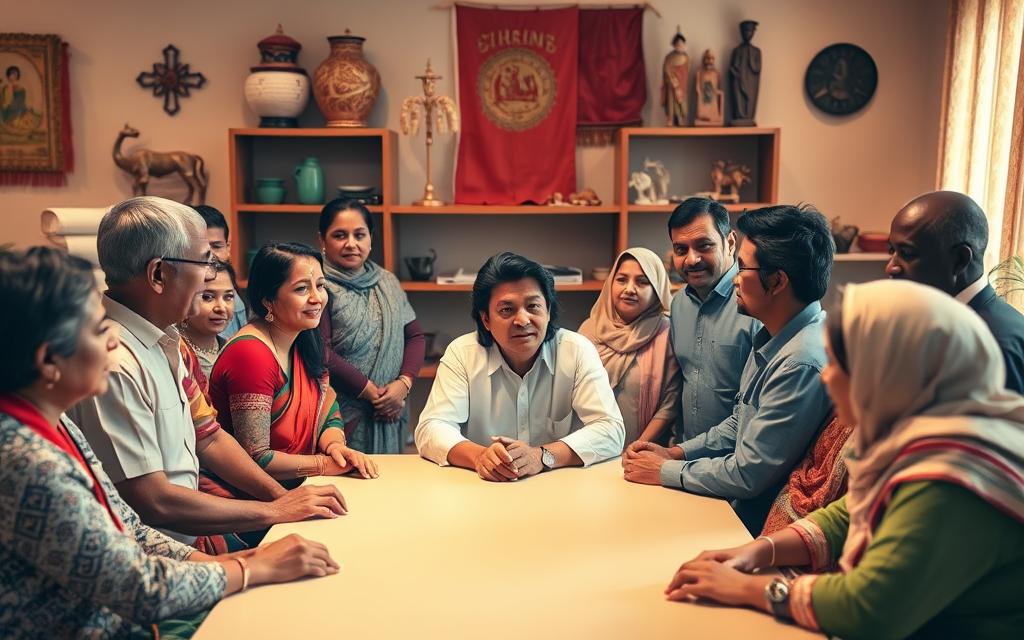
Family mediation is a complex process. It needs deep understanding of cultural nuances. When we talk about What Is Family Mediation, we see how important cultural sensitivity is.
Cultural backgrounds affect how we communicate and solve conflicts. The Collaborative Divorce Process must fit different family structures and cultural expectations. This ensures everyone can talk and understand each other.
Importance of Cultural Sensitivity
Good mediators must be culturally competent. They need to:
- Know their own cultural biases
- Understand how different families communicate
- Respect various ways to solve conflicts
- Stay neutral in all cultural settings
Tailoring Mediation for Diverse Families
Family Mediation Explained through culture needs flexible methods. Mediators should:
- Learn about specific cultural norms
- Adjust communication styles with respect
- Create spaces where everyone feels included
- Value each family’s unique experiences
Addressing Language Barriers
Good communication is key in mediation. Ways to overcome language barriers include:
- Professional translation services
- Multilingual mediation teams
- Cultural interpreters
- Visual tools for communication
Cultural understanding makes mediation a real way to understand and heal together.
The Future of Family Mediation
Family Dispute Resolution is changing fast. It’s using new ways to help families solve problems. The world of Family Law Mediation is also changing a lot.
Mediation for Families is getting into a new and exciting time. There are many big changes happening:
- Digital platforms for online mediation sessions
- Artificial intelligence helping solve conflicts
- Better data privacy and safe ways to talk
- Mediation services for all kinds of families
Emerging Technological Innovations
New technologies are making mediation better. Tools like video calls, secure messages, and online workspaces are now common. They help make mediation more accessible and effective.
Predicted Service Transformations
The future of Mediation for Families will be very different. It will use technology in new ways. Things like predictive analytics and machine learning will help mediators find better solutions.
Professional Development Trends
Mediators will need to keep learning and adapt to new tech. They must get better at using digital tools, understanding different cultures, and staying up-to-date with technology. This will help them stay good at their job.
Mediation vs. Other Dispute Resolution Methods
Family conflicts need special ways to solve them. Mediation is a special way for families to work together. It’s different from going to court.

There are many ways to solve family disputes. Custody mediation is a flexible and caring option. It’s different from strict court rules.
Arbitration vs. Mediation
In arbitration, a third person makes a final decision. Mediation lets families find their own solutions. The main differences are:
- Arbitration means a final decision
- Mediation lets families decide
- Arbitration is formal
- Mediation helps families work together
Collaborative Law vs. Mediation
Parent-child mediation is like collaborative law but different. Both value respect and talking openly.
- Collaborative law uses lawyers
- Mediation uses a neutral person
- Both try to reduce stress
Mediation as an Alternative to Litigation
Litigation can hurt families emotionally and financially. Mediation is a smarter choice. It helps by:
- Lessening conflict
- Keeping family bonds strong
- Saving money
- Finding solutions that fit
For families wanting a caring and quick way to solve problems, mediation is great. It helps families find lasting peace.
Frequently Asked Questions About Family Mediation
Understanding Divorce And Family Mediation can be tough. This section answers common questions about Family Mediation Services and Family Disagreement Mediation.
Most Common Participant Queries
Families often have many questions about mediation. Here are some of the most common ones:
- Is mediation legally binding?
- How long does the mediation process typically take?
- What are the costs involved in family mediation?
- Can mediation work if we don’t get along?
Debunking Mediation Myths
Many people have wrong ideas about family mediation. Let’s clear up some common myths:
| Myth | Reality |
|---|---|
| Mediation only works for amicable separations | Mediation can help even in high-conflict situations |
| Mediators make decisions for the family | Mediators facilitate communication, families make decisions |
| Mediation is always cheaper than court | Costs vary, but mediation is often more cost-effective |
Clarifying Key Misconceptions
Understanding the true nature of family mediation is important. It’s not about winning or losing. It’s about finding solutions that are good for everyone.
Remember, mediation is private, and you can choose to participate. It focuses on working together, not against each other.
Case Studies in Family Mediation
Family mediation helps solve big family problems. It shows how Legal Mediation Family can fix deep issues.
Mediation for Family Issues gives families new ways to solve problems. These stories show how kind and smart ways to solve conflicts work.
Successful Mediation Narratives
Families with big challenges found new ways to work together through mediation. Here are some great examples:
- A tough divorce turned into a good co-parenting relationship
- Disputes over inheritance were solved with understanding
- Old family fights were solved with respect and kindness
Lessons from Mediation Experiences
Family Conflict Resolution teaches us important things:
| Challenge | Mediation Strategy | Outcome |
|---|---|---|
| Communication Breakdown | Structured Dialogue Techniques | Improved Family Relationships |
| Financial Disagreements | Neutral Financial Facilitation | Equitable Resource Distribution |
| Parenting Conflicts | Child-Centered Mediation | Collaborative Parenting Plan |
Professional Mediator Insights
Experienced mediators say success comes from a safe, respectful place. Here, everyone feels heard and valued. Mediation changes conflicts by focusing on common goals and understanding.
Finding a Qualified Family Mediator
Finding the right mediator is key in Mediation And Family Law. They help you solve tough family problems. A good mediator can make a big difference in solving conflicts with care.
Choosing a mediator needs careful thought. They come from many backgrounds. This includes:
- Mental health professionals
- Attorneys specializing in family law
- Social workers
- Trained conflict resolution specialists
Identifying the Right Mediator
When looking into How Family Mediation Works, find mediators with the right skills. A great mediator should have:
- Certified professional credentials
- Lots of experience in family disputes
- Good communication and empathy
- Be neutral and fair
Sources for Finding Qualified Mediators
Good places to find mediators include court-approved mediation rosters. Also, check professional associations and local family law resources. State bar associations have lists of qualified mediators for family disputes.
Critical Questions to Ask Potencial Mediators
Before picking a mediator, make a list of important questions. Ask about their background, how they mediate, and their success in family cases. It’s okay to ask for references or talk about cases like yours.
Family Mediation Resources
Dealing with family conflicts needs good resources and support. This section has key tools for family mediation strategies. It helps you find Family Mediation Benefits and Co-Parenting Mediation options.
Professional groups help improve mediation. The American Bar Association’s Dispute Resolution Section and the Association for Conflict Resolution have lots of resources. Their websites have guides, research, and ways to meet others interested in Family Mediation Legal Support.
Want to learn more? Some books are very helpful. “Getting to Yes” by Roger Fisher and William Ury is a key book. Other great books are “Divorce Mediation: A Family Systems Approach” by Mark Keenan and “The Mediation Process” by Christopher Moore. They teach how to talk and solve problems well.
Online sites like Mediate.com and the National Association for Community Mediation have lots of digital stuff. They have webinars, training, and articles. These help families learn about mediation, legal stuff, and how to handle family disputes.


