

Imagine selling your car privately. Handshakes feel friendly, but what happens if disputes arise later? A bill of sale acts as your legal safety net. This document isn’t just paperwork—it’s proof of ownership transfer and terms agreed upon by both parties.
Whether you’re trading vehicles, equipment, or business assets, this guide simplifies creating a legally sound record. States like Florida require these forms for vehicle transfers, but they’re equally vital for other high-value deals. Details matter: names, item descriptions, payment terms, and dates must be precise.
Confused about notarization or state rules? We’ll clarify it all. Our step-by-step approach ensures you avoid common pitfalls. Plus, practical templates and tips streamline drafting, saving time and stress.
Key Takeaways
- A bill of sale legally confirms ownership transfer and protects both parties.
- Essential details include buyer/seller info, item descriptions, and payment terms.
- State laws, like those in Florida, may require specific clauses for validity.
- Notarization adds an extra layer of legal security for high-value items.
- Customizable templates simplify creating a professional document quickly.
Understanding the Bill of Sale
When transferring ownership of high-value items, clarity is non-negotiable. This legal record serves as a roadmap for both parties, detailing every aspect of the exchange. Unlike casual agreements, it carries weight in courtrooms and government offices.
What Is This Critical Document?
A bill of sale formally confirms the transfer of property rights from seller to buyer. It includes names, contact information, item descriptions, and payment details. For vehicles, specifics like VIN numbers and odometer readings become essential. This document transforms verbal agreements into enforceable contracts.
Sales Receipts Fall Short
While sales receipts prove payment occurred, they lack depth. A bill of sale goes further by outlining warranties, “as-is” conditions, and liability terms. Imagine selling a car: the buyer needs more than a coffee-stained receipt to register it. State agencies often require this document for vehicle title transfers.
Detailed information protects both sides. Sellers avoid claims about undisclosed defects, while buyers gain proof of legitimate ownership. For boats, firearms, or real estate, these records become even more vital. Simple receipts work for garage sales—major transactions demand ironclad paperwork.
Benefits for Buyers and Sellers
Ownership transfers demand more than trust—they require concrete proof. A well-crafted document shields both parties from “what if” scenarios while meeting state requirements. Let’s explore how this agreement creates mutual protection.

Legal Proof of Ownership
For buyers, this record acts as a shield against ownership disputes. Imagine purchasing a motorcycle: without documented details like VIN numbers, registering it becomes impossible. States like Indiana require specific vehicle descriptors to validate transfers.
Sellers benefit too. Once signed, the document prevents liability claims for undisclosed issues. If a sold truck later malfunctions, the seller can reference “as-is” clauses. Courts prioritize written terms over verbal promises.
Enhanced Transaction Security
Detailed transaction data eliminates ambiguity. Listing the exact price, payment type, and item condition reduces post-sale conflicts. Real estate deals thrive on this clarity—boundaries and fixtures stay undisputed.
Some states recommend notarization for high-value items. Florida often requires this step for boats, adding fraud prevention. Even where optional, notarized signatures strengthen enforceability during legal reviews.
Both parties gain peace of mind knowing their interests are legally anchored. Retain copies for five years—tax audits or ownership challenges become manageable with organized records.
How to Write Up a Bill of Sale: Essential Elements
Solid paperwork turns agreements into enforceable contracts. Missing key components risks disputes or legal rejection. Focus on these non-negotiable elements to build a binding record.
Critical Documents and Information
Start with full legal names and addresses for both parties. For vehicles, include the VIN and current odometer reading—states like Texas mandate this for title transfers. Describe the item’s year, make, model, and serial numbers.
List any defects using phrases like “as-is” or “with warranty.” A motorcycle sold without disclosing engine issues could lead to lawsuits. Specificity matters: “2018 Honda Civic, 85,000 miles, no accidents” beats vague descriptions.
Detailing Payment and Transfer Terms
State the exact price and payment method—cash, check, or installment plans. Include transaction dates and transfer deadlines. For example: “$12,000 paid via cashier’s check on July 15, 2024.”
Both parties must sign with printed names and dates. Notarization adds weight for high-value items like boats. In Arizona, notarized signatures prevent forgery claims. Keep copies with your ownership records for at least seven years.
Essential Information to Include
Missing critical details in transaction records can turn smooth deals into legal nightmares. Precise documentation anchors agreements, protects rights, and satisfies state requirements.

Seller and Buyer Details
Full legal names and addresses form the backbone of any valid record. List current contact information for both parties—omitting middle initials or suffixes like “Jr.” risks confusion. For jointly owned items, include all buyer seller names to prevent ownership disputes.
Consider this example: A couple selling a vintage guitar must list both spouses. Shared property requires unanimous consent for transfers. Verify IDs match the names on the document.
Description of the Item or Property
Ambiguous descriptions invite conflicts. Specify the model, year, color, and unique identifiers like serial numbers. For vehicles, the vehicle identification number (VIN) is non-negotiable. States like California reject incomplete VIN entries during title transfers.
| Element | Vehicle Example | Purpose |
|---|---|---|
| Unique ID | VIN: 1HGCM82633A123456 | Proves authenticity |
| Condition Notes | “As-is, dent on rear bumper” | Limits liability |
| Ownership History | Two previous owners | Supports value claims |
Special conditions matter. A boat sold “with warranty” needs explicit coverage terms. Use bills of prior repairs to justify pricing. Mismatched details between buyer seller copies invalidate the bill sale used during disputes.
Clarity prevents 73% of post-sale conflicts according to legal databases. Double-check every digit and descriptor—accuracy today saves headaches tomorrow.
State-Specific Requirements and Practical Tips
State laws shape every transaction, often in surprising ways. While core elements remain consistent, regional variations impact validity. Florida’s regulations illustrate how localized terms affect high-value exchanges.
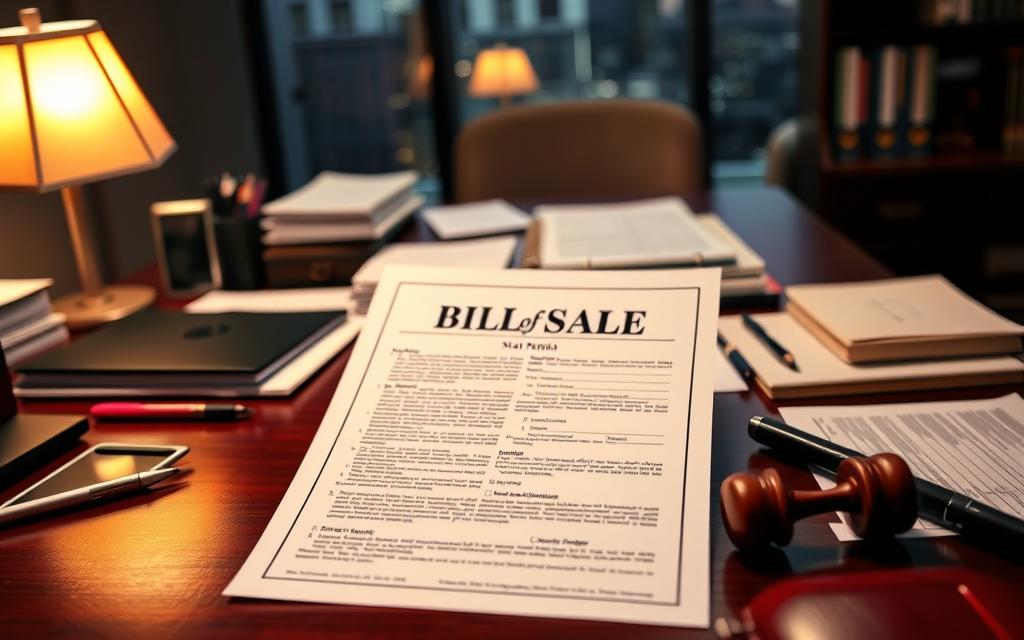
Florida Guidelines and Notarization Recommendations
Florida’s Highway Safety Department mandates notarization for vehicle identification transfers. This step deters fraud by verifying signatures. Private boat sales also require this authentication under maritime statutes.
Notarization remains optional for most other items. However, experts recommend it for transactions exceeding $5,000. Firearm transfers benefit from this added layer—dealers often insist on witnessed terms.
Considerations for Other States
California demands smog certificates in auto sale used agreements. Texas requires sellers to disclose flood damage histories. These state-specific clauses protect buyers from hidden risks.
- Check DMV websites for current vehicle forms
- Consult attorneys for multi-state transactions
- Update documents when relocating
Payment terms vary widely. Installment plans need explicit interest rates in Arkansas. Cash deals require notarized receipts in New Hampshire for items over $10,000. Always confirm local rules before finalizing agreements.
Cross-reference identification numbers with official records. Mismatched VINs or serial codes invalidate transactions. Digital templates simplify adapting write bill processes to regional needs.
Templates, Tools, and Drafting Advice
Creating a legally sound agreement doesn’t require starting from scratch. Pre-made template resources simplify the process while ensuring critical elements like payment terms and ownership details stay organized.
Using Free Bill of Sale Templates
State agencies and trusted platforms offer customizable form options. Florida’s DMV website provides vehicle-specific templates, while Template.net hosts editable versions for boats, firearms, and equipment. These resources:
- Automatically include required fields like VINs or serial numbers
- Highlight state-specific clauses for title transfers
- Offer checklists for payment methods and warranties
Always verify template sources. CocoDoc’s state-specific forms adapt to local laws, while Jotform’s PDFs allow digital signatures accepted in 47 states.
Digital Versus Handwritten Documents
Digital tools like PandaDoc streamline drafting with e-signature capabilities and cloud storage. Key differences:
| Format | Pros | Cons |
|---|---|---|
| Digital | Instant sharing, audit trails | Some states require wet signatures |
| Handwritten | Universal acceptance | Easily lost or damaged |
For hybrid solutions, Smallpdf lets users edit templates online before printing. Always retain copies in both formats when possible—digital for quick access, physical for notarization needs.
Follow these steps with any template:
- Download from verified sources like Template.net
- Input buyer/seller details and item descriptions
- Review state compliance flags in the form
- Sign electronically or print for manual execution
Special Considerations for Vehicles, Boats, and More
Unique items demand tailored documentation. Standard forms often miss critical details required for specialized transactions. Whether transferring a vintage motorcycle or antique firearm, precision prevents legal headaches.
Vehicle, Boat, and Firearm Transactions
Automotive sales require more than basic buyer-seller info. Always include the VIN, exact odometer reading, and transaction date. States like Michigan reject incomplete vehicle records during title transfers. Trailers attached to boats need separate documentation with weight capacities and hitch types.
Marine transactions hinge on Hull ID numbers and engine specs. Florida enforces notarization for boats over 16 feet. Firearm sales require extra caution—23 states mandate background checks paired with notarized bills of sale. Always verify local laws before drafting.
| Item | Required Details | State Examples |
|---|---|---|
| Vehicle | VIN, Odometer, Condition | CA, TX, FL |
| Boat | Hull ID, Trailer VIN | FL, WA, MI |
| Firearm | Serial #, Notary Seal | PA, VA, CO |
Additional Tips for Unique Sales Scenarios
Describe item condition using specific terms like “restored” or “non-operational.” For collectibles, attach dated photos showing scratches or modifications. This creates a visual timestamp that supports written descriptions.
Use secure email portals when exchanging digital documents. Services like DocuSign provide encrypted channels for sensitive sales agreements. Always request read receipts to confirm delivery.
Include time stamps alongside transaction dates for high-value items. Jewelry appraisals and firearm registrations often require this precision. Retain copies in multiple formats—physical for notaries, digital for quick access during disputes.
For complex scenarios, consult sales agreements experts to ensure compliance. Missing one detail could invalidate your entire transaction.
Compliance, Notarization, and Signature Best Practices
Legal validity hinges on meticulous attention to detail. Proper execution ensures your transaction withstands scrutiny from courts and state agencies. Follow these protocols to safeguard interests and maintain enforceability.
Meeting Legal and State Requirements
Start by verifying state-specific forms. Arizona requires notarization for vehicles priced above $10,000, while New York mandates witness signatures for boat transfers. Cross-check these three elements:
- Current templates from your Secretary of State’s website
- Tax collector filing deadlines for high-value items
- Federal regulations for firearms or cross-border transactions
Consult legal counsel for multi-state deals. A motorcycle sold from Texas to Oklahoma needs compliance with both jurisdictions. Non-aligned documents risk rejected title transfers or tax penalties.
Ensuring Accurate Signatures and Record Keeping
Notarization remains optional in many regions but strengthens legitimacy. Florida notaries verify identification through driver’s licenses or passports. Follow these signature best practices:
- Sign in blue ink to distinguish originals from copies
- Include printed names below signatures
- Date entries using MM/DD/YYYY format
Maintain records for seven years—the IRS audit window. Store physical documents in fireproof safes and digital scans in encrypted clouds. Share copies with both parties immediately after signing.
| Step | Purpose | Tools |
|---|---|---|
| ID Verification | Prevent fraud | Gov-issued IDs, notary journals |
| Terminology Checks | Avoid disputes | Legal dictionaries, style guides |
| Filing Systems | Quick retrieval | Labeled folders, cloud backups |
For high-risk items like antiques, involve professional appraisers. They’ll make detailed condition reports that complement your documents. Clear terminology like “non-refundable deposit” prevents misunderstandings.
Update your processes annually. Laws evolve—Nevada revised notary rules in 2023 to accept digital seals. Staying informed helps you make bulletproof agreements every time.
Conclusion
Finalizing transactions without proper documentation invites risks. A well-crafted bill of sale transforms handshake deals into legally binding agreements. Essential elements like buyer and seller details, payment terms, and precise item descriptions protect both parties from disputes.
Adherence to state requirements ensures validity—Florida’s notarization rules for vehicles or California’s VIN mandates illustrate this necessity. Digital templates simplify compliance while maintaining accuracy for high-value items like boats or firearms.
Retain copies securely for future reference. Clear records serve as proof during tax audits or ownership challenges. Both parties benefit from organized documentation that withstands legal scrutiny.
Use this guide’s framework to create agreements that stand firm in any scenario. Prioritize precision, follow regional guidelines, and leverage trusted tools for seamless transactions.
